

 Best Way To Heat an RV or Camping Vehicle
As soon as the weather turns cold, I start getting messages from people living in their RVs or other type of camping vehicles.
“How do I heat this thing? It’s freezing in here!”
Travel trailers, motor homes, and other RVs are well-known to be poorly insulated, definitely not built for winter living. Still, it’s estimated that over a million people live in one year-round. Whether by personal choice or financial necessity, we all need to stay warm safely.
Probably the biggest obstacle to supplementing an existing heating system is a lack of wall space. Let’s face it- where would you put another heater? Are there other kinds of heaters that would work? What would work for me? Will any kind of additional infrastructure be required? What kind of fuel does it use? How much would it cost? Is it safe?
Let’s take a look at some possible solutions.
Available Energy Sources
- Propane: Most RVs have a propane heater. These are adequate for cool days, but often are not enough for the bitter cold of winter.
- Diesel
- Electricity: There are a myriad of space heaters that use electricity.
- Wood: Wood is usually available and makes a great heat source if done correctly.
- Hydronic Hot water heating.
Propane Heaters
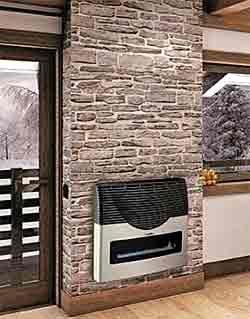
Propane heaters use combustion of the gas to create heat. While much cleaner than most fuels, the combustion gasses (Carbon Monoxide, and water vapor) must be vented outside to be safe.
Direct Vent Propane Heaters
The heaters in most RVs are direct-vent propane heaters. They’re very safe but frequently insufficient when the cold winds blow. Additional propane heaters can be added, BUT- they need to be installed correctly. The gas line needs to be routed and connected and the outdoor vent need to be cut in. For this reason, adding an additional direct vent propane heater to your RV or camping vehicle might not be the best choice.
The Martin direct-vent heaters are very nice looking (see photo) but not always available. Here’s a link to Amazon for some other direct vent propane heaters.
Vent Free Propane Heaters
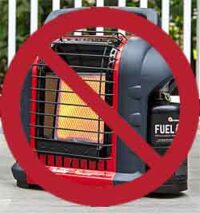
Free-standing propane heaters seem like a good option, but they are a dangerous choice. These non-vented heaters emit large amounts of carbon dioxide and moisture into your environment. It’s the same as using your gas stove for heat. Every gas range or cook top sold comes with LARGE-LETTERED WARNINGS NOT TO USE THEM FOR HEATING PURPOSES!
Not only do they emit carbon dioxide and moisture, THEY USE UP YOUR BREATHABLE OXYGEN! They are equipped with an emergency low oxygen safety system because of this.
These ventless, or vent free propane heaters would be OK to use in a tent or other well-vented structure, like a tent trailer. If this is your situation, you can plan on using up a 1 lb. propane canister in about 5.5 hours. To be safe, you would need to open the windows for fresh air. If this fresh air happens to be cold, you’re defeating the purpose. For more on the dangers of unvented propane heaters, see this page of our website: Carbon Monoxide Detectors in Tiny Homes.
Despite the dangers, people use these because there is basically no installation and they are relatively inexpensive.
Diesel Heaters
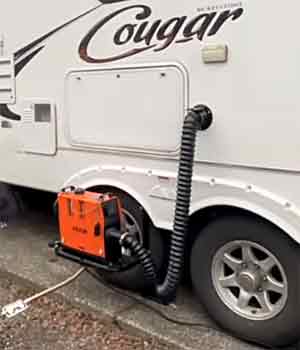 Diesel heaters come in many shapes and sizes from about a hundred manufacturers. While these are great off-grid heat sources, they are fairly complex mechanisms. According to user reviews, the less expensive models work best for those folks who are good at fixing things. Apparently, they will require service.
These heat up very quickly, but the fuel pump and fan do make considerable noise. Plus, who wants to breathe diesel fumes? You’ll want to keep the whole unit outside. About one gallon of fuel will run it all night.
This Vevor diesel heater has Bluetooth app control, automatic altitude adjustment, and a remote control. Vevor has a good line of diesel heaters. Take 8% off one item using this link through December 30, 2025.
Here’s a good YouTube® video by “Dave’s Tired Feet” showing a detailed way to install the Vevor diesel heater into his RV as shown in the picture.
Here’s a good YouTube® video showing the installation of a diesel heater internally: Converted School Bus
Electric Space Heaters
Of all the questions I receive, understanding the power and limitations of your rig’s electrical system is at the top of the list. If you are considering an electric space heater, which is easy to install and seem to be a no-brainer, you should understand that they do require a large amount of power, 15-amps. If you are living off-grid jump here for more information on off-grid electrical sources.
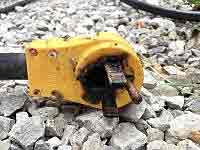
In a 30-amp RV you’ll be using up to half your electric current on a full time basis. While your electrical distribution system might be rated for 30 or 50 amps, this draw puts a strain on the electrical infrastructure. The danger lies with corroded connectors. See this page of the website to be aware of the danger and what you might need to do before using an electric space heater: Melted RV Shore Power Plug How to Avoid Tragedy.
The various types of electric space heaters are:
- Radiant Heaters
- Infrared Heaters
- Ceramic Heaters.
- Electric Fireplaces
Radiant Oil-filled Space Heater
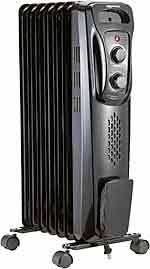
An oil-filled radiant space heater like the one in the photo is very safe to use. They can run safely all day or night without supervision. Even if tipped over, they do not get hot enough to start a fire. Most have three heat settings and are completely silent. The downside is they are slow to bring the heat up in a room and use convection to spread the warmth.
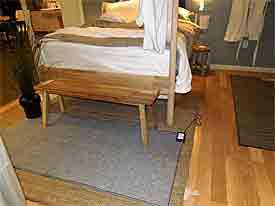
A heated rug is another form of convection heating. If the floor of your home leaves you feeling chilly, Woo Warmer is the solution you’ve been searching for. It radiates heat through your feet to warm your body. Woo Warmer is a versatile personal electric heater you can use in any space you need instant warmth. There’s no need to rip up your floor or spend extra money cranking up the heat. To use Woo Warmer, just cover it with a rug or carpet and plug it in.
There are several sizes. This 33″ x 72″ warmer uses only 180 watts.
Personal Leg and Feet Warmer

Here’s another good idea in the radiant heat department. If you work at home and sit at a desk for long periods, you know your legs and feet can get cold. This is especially true if your floor is not well-insulated.
This radiant leg and foot warmer, like all radiant heaters, warms your legs and feet directly, is completely silent, and uses just 300 watts of power.
This slim, lightweight, and foldable design stores away easily when not in use. There are three heat settings. It never gets hot enough to burn, making it safe to use around pets and even babies. For better or for worse, your dog will probably curl up on your feet.
It’s just $74.95* on Amazon through this link.
Infrared Heaters

My favorite of the electric heaters is the infrared or far-infrared type. Far-infrared is a newer technology that heats objects, like you and/or your furniture, directly. It’s like being warmed by the sun. Even more efficient, the Boldr brand of far infrared heaters uses about half the electricity as other similar heaters. The warmth is instantaneous.
As an added benefit, infrared warmth penetrates deep into walls, keeping them dry and preventing mold-causing moisture.
These are great for long, narrow structures. You can place a panel in each room spreading out the warmth. Many brands, like Boldr, have a WiFi mesh control system so you can program them to supply the heat you want when you want. See more about that on this page of our website: Best Ways to Heat Your Tiny Home
The Boldr far infrared panels are designed for easy wall mounting, but can be installed on the ceiling with a bit more effort.
Many companies make infrared heaters. Some are free-standing and just need to be plugged in to a wall outlet. See my curated idea list in my Amazon store for the 12 best ones on their platform.
Ceramic Heaters
 Ceramic heaters are great for small spaces. They heat fast and cool off fast after use. Perfect for a bathroom using just 450 watts. Plugs directly into the AC outlet.
This ceramic space heater for indoor use is designed with a timer function from 1 to 12 hours in 1-hour increments. Simply press the ” Timer ” button to set the desired time
Electric Fireplace
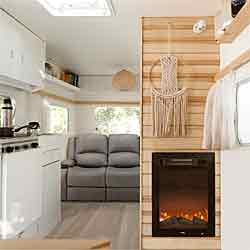
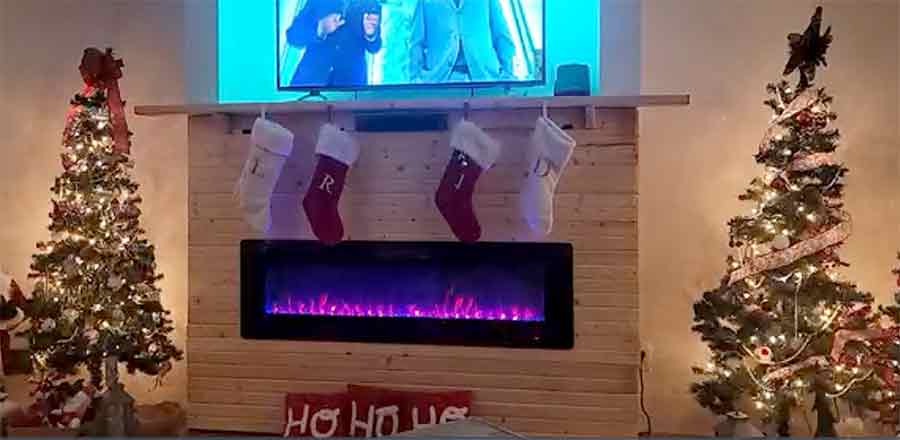
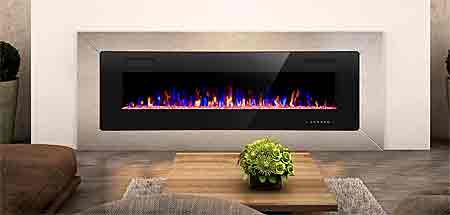
An electric fireplace, like that shown at the top of the page, is basically just a space heater with a fancy light show built-in. Their are hundreds of different models. They can be free-standing, wall-mounted, or built-in. There are also propane fueled fireplaces like that shown above.
This fireplace heater, offered through RecPro, has two vibrant flame colors along with four vibrant flame modes and brightness settings. You can set the flames to a warm orange color, a vibrant blue, or combine the two together. You can also set the flame colors to cycle, giving you another way to create the perfect atmosphere.
Get a 5% discount from RecPro using coupon code TINYLIFE.
Getting Extra Electricity For an Electric Space Heater
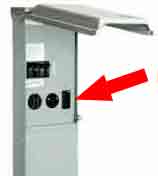
Electric heaters draw considerable amounts of power. The AC outlets of an RV are cheaply constructed and really not made to handle that much current on a consistent basis. If you are using shore power, a sneaky way to get more power for an electric space heater is to run an extra heavy duty extension cord directly to the 20-amp outlet of the RV Park’s electric pedestal.
There’s usually a way to feed this into the vehicle or trailer by fishing it through an existing hole (which you can then caulk close or stuff with insulation). If there is no opening, see my video about installing my portable power station into my motor home for tips.
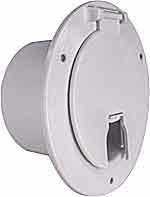
I brought my extension cord in through the same hatch as the shore power cord, then added this power cord hatch on the inside. It was pretty easy to do.
To avoid the danger of a fire, make sure the contacts on your extension cords are free of corrosion. See detail about that on this page of our website: Melted RV Shore Power Plug How to Avoid Tragedy
Off-Grid Power Sources
Supplying enough power to run a 1500 watt electric heater off-grid will require a generator or a very large, very expensive solar system.
Refer to these pages for more details:
- Portable Inverter Generator Comparison
- Running RV Appliances Like Air Conditioners Off-Grid
- Generators or Portable Power Centers: Which One is Right for You?
- Off-Grid Solar System Components
Wood Stoves
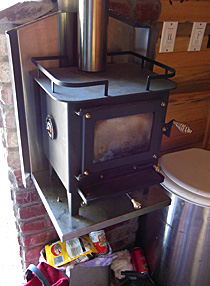
Wood stoves are great heat sources and can be safely installed in RVs and camping vehicles. We’ve written several pages about wood stoves already. A wood stove is a great source of dry heat, but should only be a secondary heat source.
See these pages of the Tiny Life Consulting website for detailed information:
- Wood Stoves for Tiny Abodes
- Wood Stove Is It Safe To Use In An RV
- Best Way to Prepare Firewood for a Tiny Wood Stove
- Best Ways to Heat Your Tiny Home
Size Considerations
The key to using a wood stove in a small space is to size it correctly. Too big and it can practically drive you out. Too small and you need to keep adding fuel every couple hours. See our BTU Calculator to determine the best size for your space.
Detachable Chimney
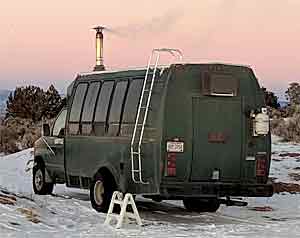
A detachable chimney will help you get the height you need above your roof without having to drive around with a three-foot pipe sticking out of your rig. A detachable chimney can also be a big help for stealth vans when you don’t want to be noticed, or for a 5th wheel that is close to the maximum legal height to tow.
See more details on the Tiny Wood Stove website.
Outside Air Intake
A wood stove requires oxygen for combustion. It will draw from the room it’s in unless a source of outside air is ducted into the firebox. If no outside air is provided, the wood stove will draw room air, which in turn draws air from every gap or leak anywhere else in your RV. These cold leaks can condense moisture and begin mold growth and rust. Always pick a wood stove with an outside air intake system.
Other Pages Of The Tiny Life Consulting Website You’ll Be Interested In
RV Winter Living How to Prepare
Skirting for Tiny Houses Travel Trailers RV’s
Heating Under Your RV Is it worth it?
Prevent Freezing Water Lines In Your Tiny House
Dealing with Moisture in an RV



Leave A Comment